_1764599374668-geChhYOS.png "Branded Mayhem")
_1768833712366-BmMr1hCt.png "Branded Mayhem")

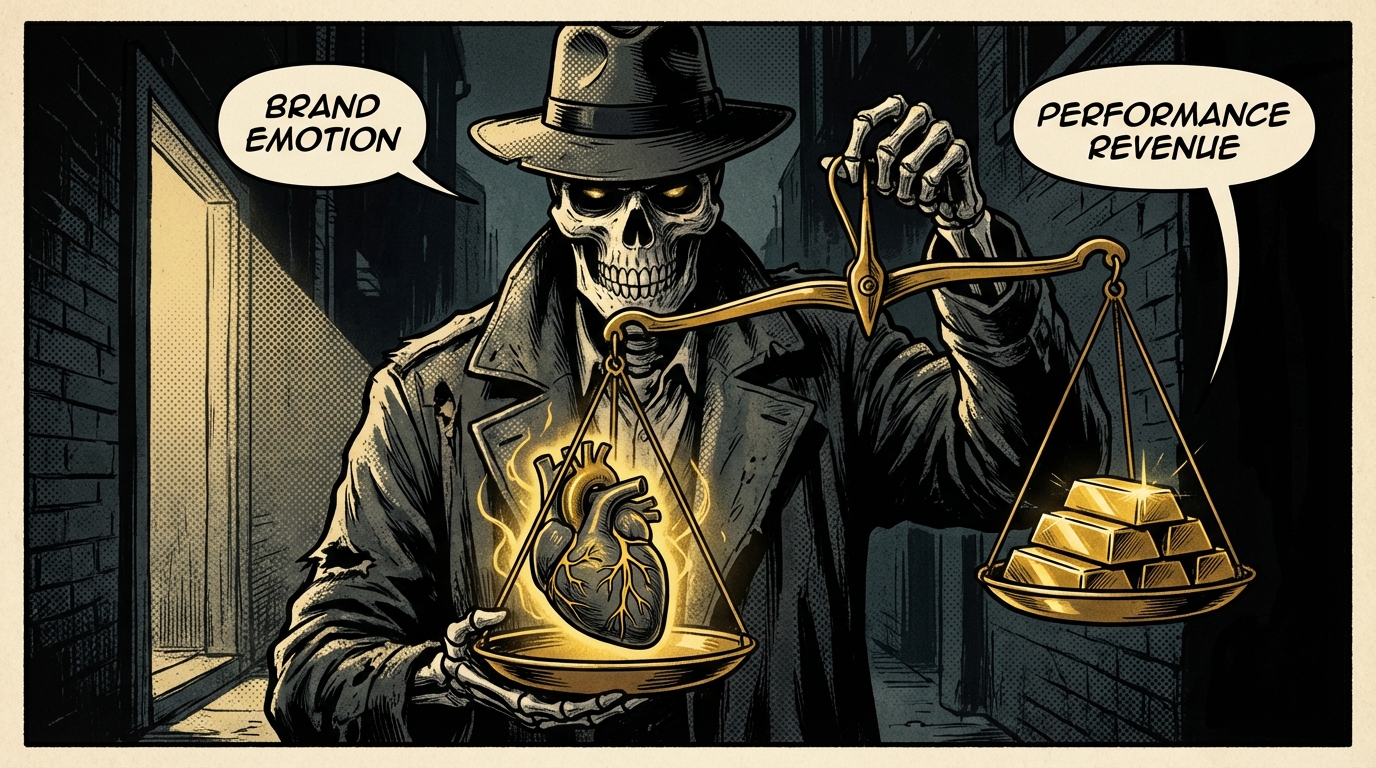
Everyone loves to pretend there are two types of marketing:
That split is convenient. It lets people blame "awareness" when nothing converts and blame "bad leads" when performance tanks. It lets agencies run separate retainers for each. It lets CMOs point fingers at whichever side didn't deliver.
Here's the uncomfortable truth that kills the false binary:
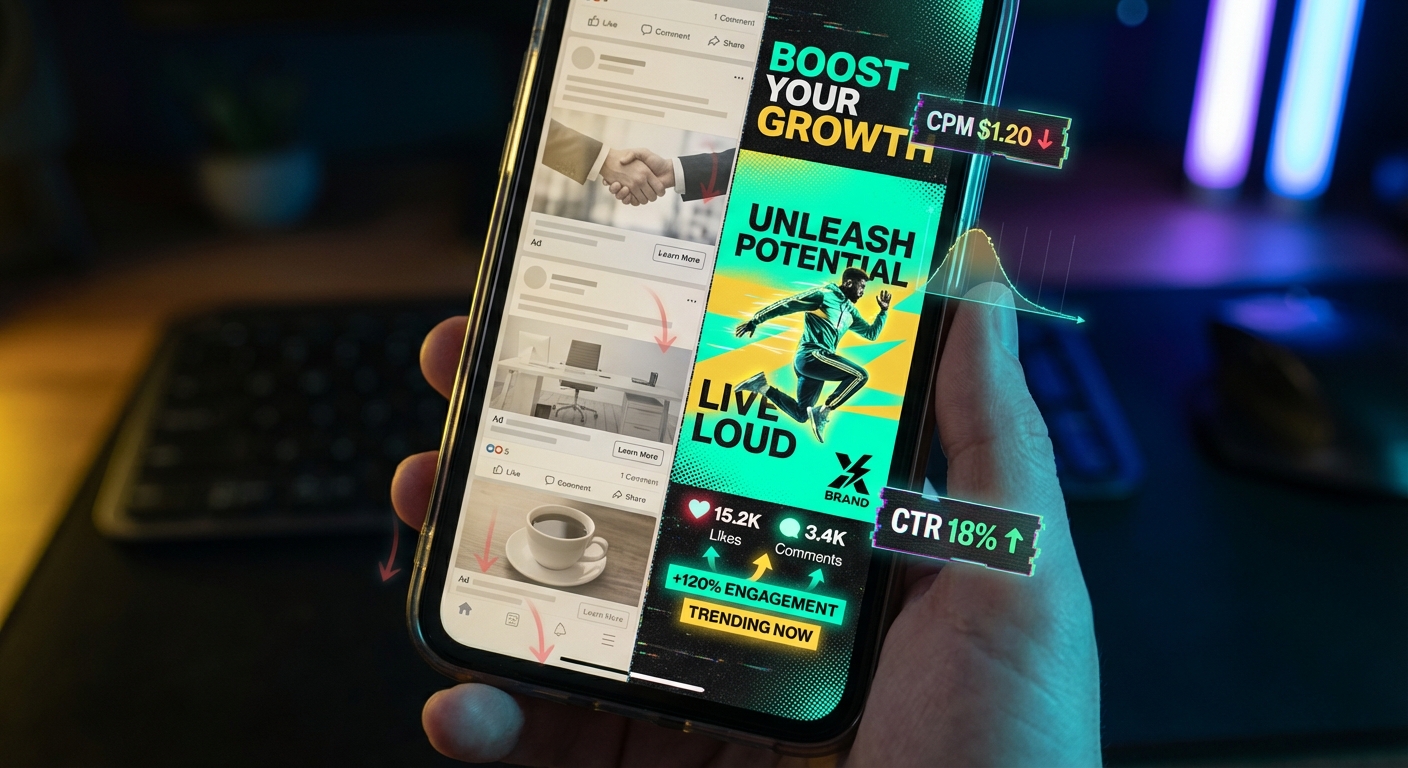
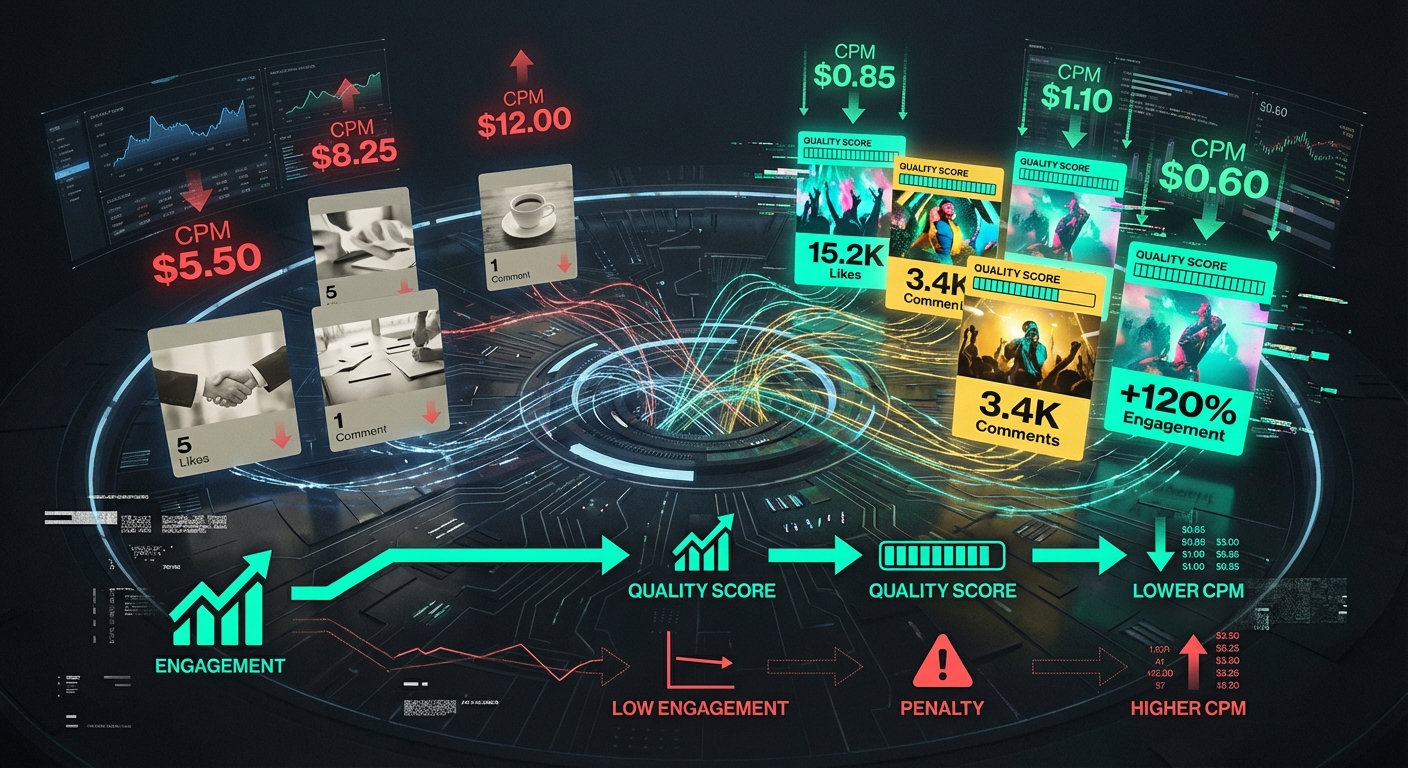
A strong brand lowers your CPMs. Platforms reward engagement. Boring ads cost more. Brand is literally a performance metric.
Not metaphorically. Not spiritually. Literally. This is brand-formance—the merger of brand equity building and hard conversion metrics into a single operating system.
Let's break that open.
How Ad Platforms Actually Think
Ad platforms have one basic survival instinct:
"Keep people scrolling, tapping, watching, and buying so we can keep printing money."
To do that, they need ads people do not immediately hate. Whether you're running programmatic display advertising, connected TV (CTV) advertising, or native ad formats, the auction logic is the same.
So under the hood, auction systems quietly reward the stuff that keeps attention and quietly punish the stuff that feels like a beige spreadsheet in video form. This is true whether you're measuring programmatic display CPM or CTV completion rates.
In practice, that means:
Your media buyer sees it as "CPM went down after creative refresh."
The platform sees it as: "Finally, you stopped wasting my users' time."
What drives that engagement at scale, beyond a lucky one-off ad? What keeps your paid media efficiency ratio healthy quarter after quarter?
Brand.
Not logo files. Not a "mood board."
Brand as a coherent, recognizable, emotionally loaded pattern that people respond to. Brand as mental availability—the odds that someone thinks of you when they enter a buying moment.
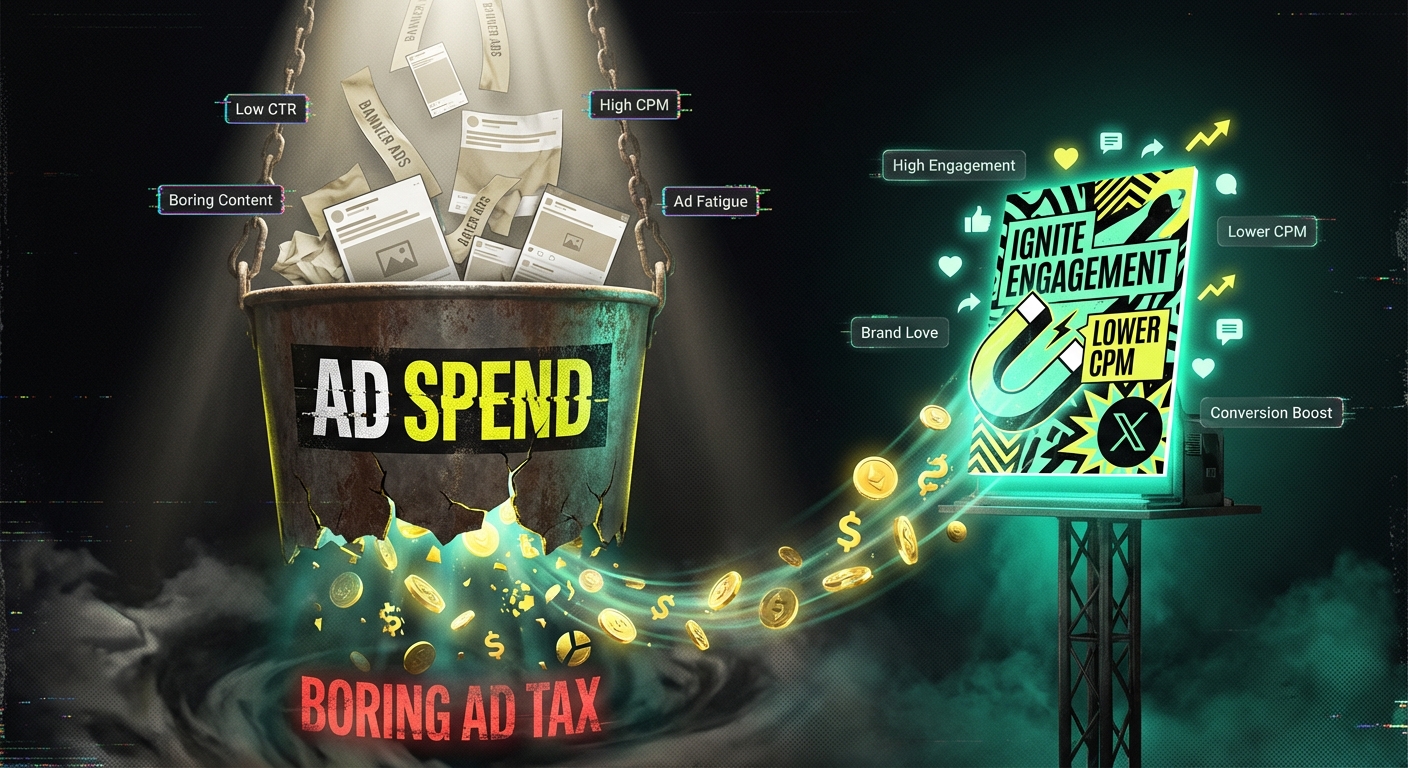
Boring Ads Are A Hidden Tax
You are already paying for "brand."
If you have no brand, you're just paying in the most expensive way possible. Check any CPM inflation benchmarks report—costs are rising across the board. The brands that survive are the ones that don't pay the "boring tax."
Boring ads cost you three ways:
Higher auction costs
Low engagement and low relevance score mean you pay more to show up. Every impression is taxed for wasting the feed. Your customer acquisition cost (CAC) balloons. Your CAC payback period stretches into oblivion.
Worse inventory
Your ads get shoved into lower quality placements and weaker audiences because your stuff is dead weight. You miss the high-intent audience segments entirely. Your audience segmentation tactics become meaningless when the algorithm deprioritizes your creative.
Shorter creative shelf life
When your ads are generic, they burn out faster. You are stuck constantly rebuilding new variations of the same forgettable thing. No dynamic creative optimization system can save fundamentally boring work. You're just optimizing garbage faster.
So when someone says, "We don't really do brand, we're performance-focused," what they mean is:
"We donate extra budget every month to Meta and still don't get remembered."
Strong Brand = Built-In Performance Boost
A strong brand is not just a vibe. It is a system that makes performance cheaper and more reliable. It's the foundation of a true performance branding strategy.
Here's how it plays out in the feed:
Instant recognizability
Consistent visual language, tone, and story give people a sense of "I know these guys" in half a second. Familiarity lowers resistance. That shows up as higher scroll-stop and better CTR. This is visual storytelling for conversion at its finest—every frame reinforcing omni-channel consistency.
Emotional shorthand
When your brand has a clear emotional lane (relief, rebellion, calm, mischief), your ads hit faster. You are not spending 15 seconds explaining why you matter. People just feel it, then decide. This is the opposite of direct response copywriting that has to explain everything from scratch every time.
Memory compound interest
That customer who isn't ready to buy today still logs you in their mental folder. Brand makes your next ad, email, or search result perform better because you are not starting at zero every time. Run a brand lift study and you'll see it—your view-through attribution numbers will tell the story of people who saw, remembered, and came back later.
Creative that is easier to scale
With a strong brand system, you can produce more ads without losing coherence. That gives the algorithm more chances to find winners without degrading into chaos. User-generated content (UGC) ads slot into your system. Creative testing frameworks actually have something coherent to test against.
The outcome the platform sees:
"People tend to notice, watch, click, and not immediately bounce when this brand shows up."
So it gives you cheaper reach and better delivery.
That is performance. That is brand-formance.
"Brand Is Fluffy" Is An Expensive Belief
The "brand is fluffy" crowd is usually staring at short windows and incomplete dashboards. They're running multi-touch attribution models that only look back 7 days. They're ignoring full-funnel marketing attribution entirely.
They see:
What they don't see:
Their full-funnel attribution models are broken because there's no brand to attribute. Their share of search metrics are flat because no one remembers them long enough to type their name.
Believing brand is optional is like saying brakes are optional because you only measure zero-to-sixty.
Turning "Brand" Into A Performance Lever
If brand is literally a performance metric, treat it like one. Measure your brand velocity score. Track your share of voice analysis. Run brand lift measurement studies.
Here's how you do that in practical, non-theoretical terms.
1. Define a sharp, non-vanilla point of view
If your positioning could belong to any of your competitors, you are already overpaying for ads. Your excess share of voice (eSOV) is being wasted on forgettable messaging.
Clarify:
This becomes the spine of every campaign, not just the "About" page. It's what drives mental availability—the probability someone thinks of you first.
2. Build recognizable creative "anchors"
Pick a small set of visual and verbal elements that repeat until people could spot you without the logo.
Examples:
These anchors are not constraints that kill creativity. They are rails that help the algorithm recognize what belongs to you. They make conversion rate optimization (CRO) easier because you're not fighting for attention every time.
3. Test like a performance marketer, not a brand committee
Most "brand work" dies in a slide deck. You want it to live in the feed. Use real creative testing frameworks, not committee vibes.
So you:
Brand is not a museum piece. It is a hypothesis you run through the ad account. Your sales velocity formula depends on it.
4. Design content for engagement, not announcements
Platforms reward engagement. That is the game.
So stop treating your ads and content like press releases.
Shift from:
"We're proud to announce…"
to
"Here's the thing nobody tells you about…"
From:
Static product beauty shots
to
Stories, tension, humor, or relief that happen to feature your product
Your content should answer: "Why would a stranger care enough to stop scrolling?"
That answer is brand work. Then the metrics follow. Your pipeline velocity calculation will thank you.
Performance Branding: Where This All Lands
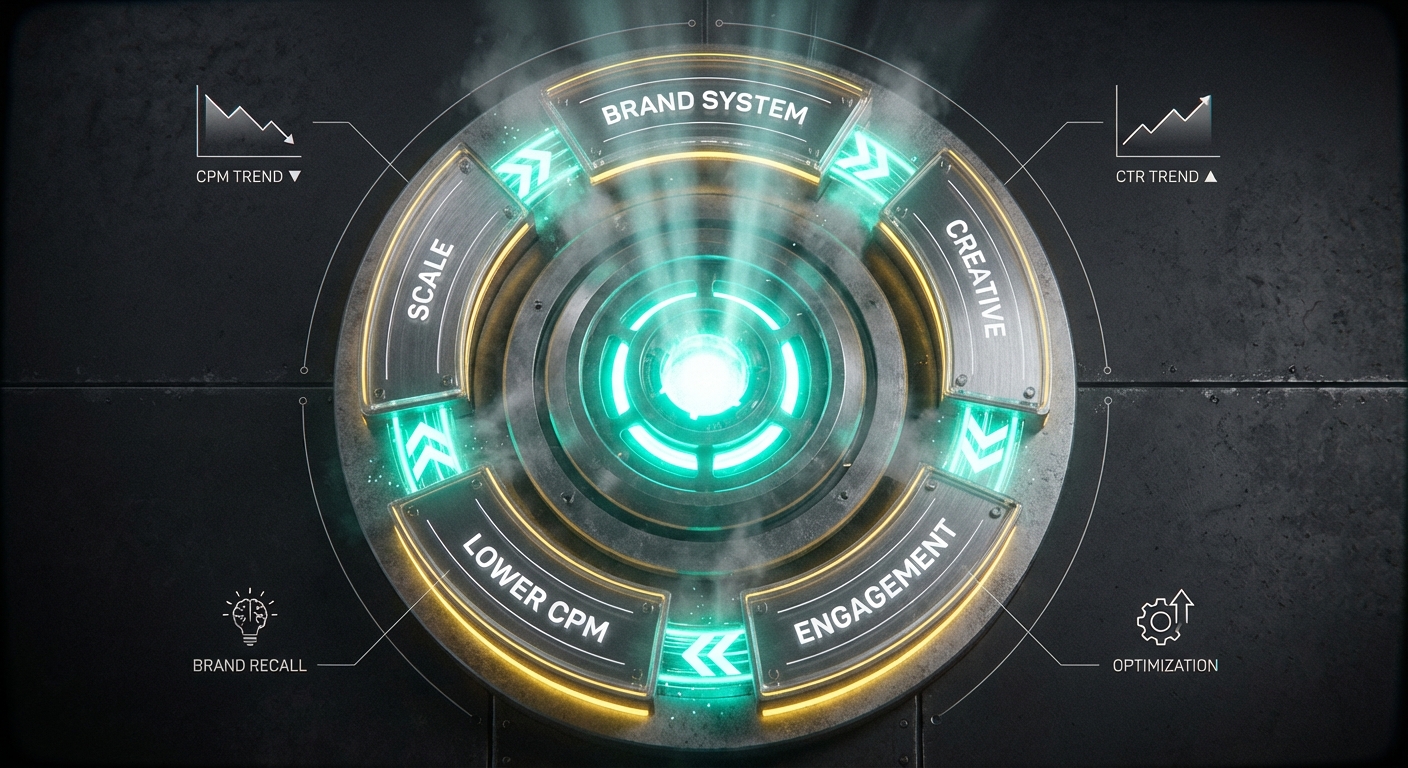
If you separate "brand" and "performance," you get:
If you integrate them, you get a true performance branding strategy:
That's not some philosophical middle path. It is the only strategy that makes financial sense when attention is expensive and every feed is noise.
The Metrics That Matter
If you're running brand-formance, here's what you should be tracking:
Stop hiding behind multi-touch attribution models that give credit to the last click. Real full-funnel marketing attribution shows the full picture—including the brand impressions that made the final click possible.
The Bottom Line
You can spend the next year trying to out-target, out-bid, or out-hack the algorithm.
Or you can accept the simple, annoying truth:
A strong brand lowers your CPMs. Platforms reward engagement. Boring ads cost more. Brand is literally a performance metric.
Treat brand like the performance lever it is, and the platforms will quietly pay you back in cheaper reach, better clicks, and customers who already feel like they know you.
Your customer acquisition cost (CAC) will drop. Your return on ad spend (ROAS) will climb. Your share of voice analysis will show you winning.
Which beats donating margin to boring ads for another quarter.
Now you understand the economics. For the complete philosophy, read The Third Path. To measure whether your brand is actually working, try The Poor Man's Truth Serum. And to understand the demand you can't track, study The Dark Funnel.
— The Mayhem Crew
"A strong brand lowers your CPMs. Platforms reward engagement. Boring ads cost more. Brand is literally a performance metric."

_1770441011833-DLktHRYW.jpeg "Branded Mayhem vs The Richards Group")