_1764599374668-geChhYOS.png "Branded Mayhem")
_1768833712366-BmMr1hCt.png "Branded Mayhem")

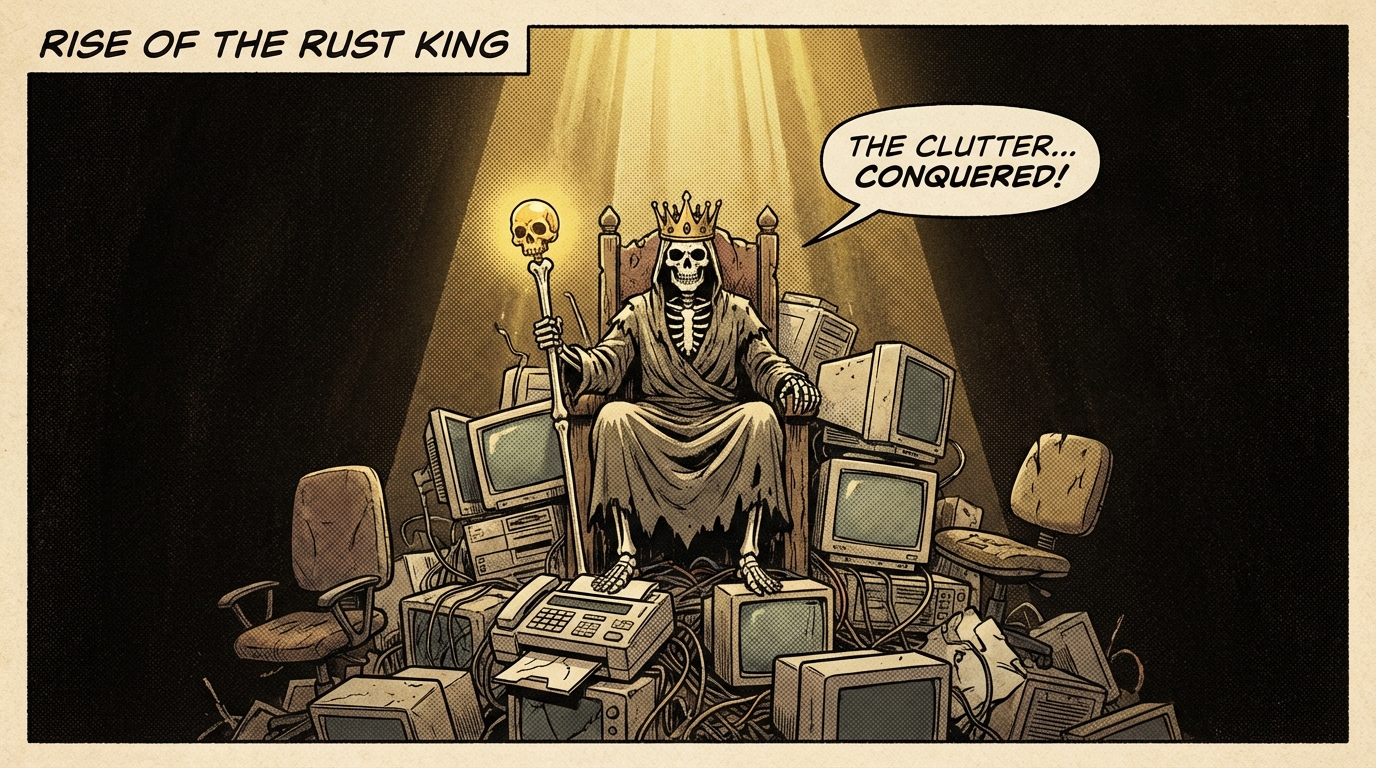
The Outgrown Brand Problem
You built your company in 2018. You were scrappy. You served anyone who would pay. Your logo was designed by your co-founder's friend.
Now it is 2026. You have real clients. Real revenue. A real team.
But your brand still looks like 2018.
This is the outgrown brand problem: Your business has evolved, but your brand has not kept pace.
The result:
Repositioning fixes this. Not by changing who you are, but by finally telling the truth about who you have become.
---
What Repositioning Actually Means
Repositioning is not a rebrand. It is not a logo refresh. It is not a website facelift.
Repositioning is a strategic shift in how your brand is perceived relative to competitors and alternatives.
A rebrand changes assets. New logo, new colors, new fonts.
Repositioning changes perception. Who you are for, what you stand for, why you are the obvious choice.
You can rebrand without repositioning (new logo, same strategy). You can reposition without rebranding (new strategy, same logo). The most powerful moves do both.
---
The 5 Signs You Need to Reposition
Sign 1: You Compete on Price
When every sales conversation turns to pricing, it is a positioning problem.
If buyers see you as interchangeable with competitors, price becomes the only differentiator. Repositioning creates differentiation that justifies premium pricing.
Sign 2: You Have Expanded Beyond Your Original Category
You started as a web design agency. Now you do brand strategy, CRM implementation, and content production.
But your website still says "web design." Your positioning has not caught up to your capabilities.
Sign 3: Your Best Clients Do Not Match Your Marketing
Your marketing attracts small businesses, but your best clients are mid-market companies. There is a mismatch between who you say you serve and who you actually serve well.
Sign 4: You Are Embarrassed by Your Website
If you hesitate before sharing your URL, that is a signal. Your external presence does not match your internal reality.
Sign 5: A High-Stakes Moment Is Coming
You are 6-18 months from a raise, acquisition, major launch, or exit. The stakes are too high for your current brand.
---
The Repositioning Framework
Here is how we approach repositioning at Branded Mayhem:
Phase 1: Market Truth (Week 1-2)
Before changing anything, understand reality:
Competitive Mapping
Customer Perception Audit
Internal Reality Check
The goal is clarity on where you are and where you want to be.
Phase 2: Positioning Development (Week 2-3)
With truth in hand, define your new position:
The Category Question
The Differentiation Question
The Buyer Question
Output: A positioning statement that your entire company can recite.
Phase 3: Identity Translation (Week 3-5)
Translate strategy into visual and verbal identity:
Visual Identity
Verbal Identity
Proof Architecture
Phase 4: Market Introduction (Week 5-8)
Roll out the new position:
Internal Launch
External Launch
---
Real Repositioning Example: 5ironCyber
5ironCyber came to us as "another IT security company."
Their visual identity was generic: blue backgrounds, shield icons, stock photos of servers. They looked like every other managed security provider.
But they were not like every other provider. Their core capability was Active Threat Response: they did not just monitor, they moved.
The Repositioning:
1. From "MSP with security services" → "Active Threat Response"
2. From generic blue → Dark, modern palette with motion-enabled headers
3. From stock imagery → Custom brand photography showing real team
4. From feature-based messaging → Transformation messaging ("We respond in 4 hours. Your current provider takes 72.")
The result was a brand that signals authority, not commodity. Conversations shifted from price to capability.
---
The Timeline Reality
Repositioning should take 60-90 days. Not 12 months. Not "whenever we get around to it."
Why 60-90 days works:
Why 12-month projects fail:
If you cannot commit to a focused sprint, do not start.
---
The Cost of Not Repositioning
Every day your brand does not reflect your reality, you pay a hidden tax:
Repositioning is not vanity. It is economics.
---
The Bottom Line
Your brand should match your ambition.
If you have outgrown your current position—if you are competing with a 2018 brand in a 2026 market—repositioning is how you close the gap.
Not by inventing a new identity, but by finally showing the market who you have become.
Book a Brand Therapy call and we will assess your repositioning opportunity in 30 minutes.
— The Mayhem Crew
"Repositioning is not about changing who you are. It is about finally telling the truth about who you have become."
Frequently Asked Questions
What is brand repositioning?
Brand repositioning is the strategic process of changing how your brand is perceived in the market. It involves updating positioning, messaging, visual identity, and market presence to reflect who you are now, not who you were when you started.
When should a company reposition their brand?
Reposition when: your market has evolved but your brand has not, you are competing on price instead of value, you have expanded services but still look like your old self, or you are preparing for a major milestone (raise, acquisition, IPO).
How long does brand repositioning take?
A focused repositioning sprint takes 60-90 days. This includes strategy, visual identity, messaging, and web presence. Some companies try to stretch this over 12-18 months, but momentum dies and the project stalls.
_1770441011833-DLktHRYW.jpeg "Branded Mayhem vs The Richards Group")