_1764599374668-geChhYOS.png "Branded Mayhem")
_1768833712366-BmMr1hCt.png "Branded Mayhem")
You Are Right to Be Skeptical

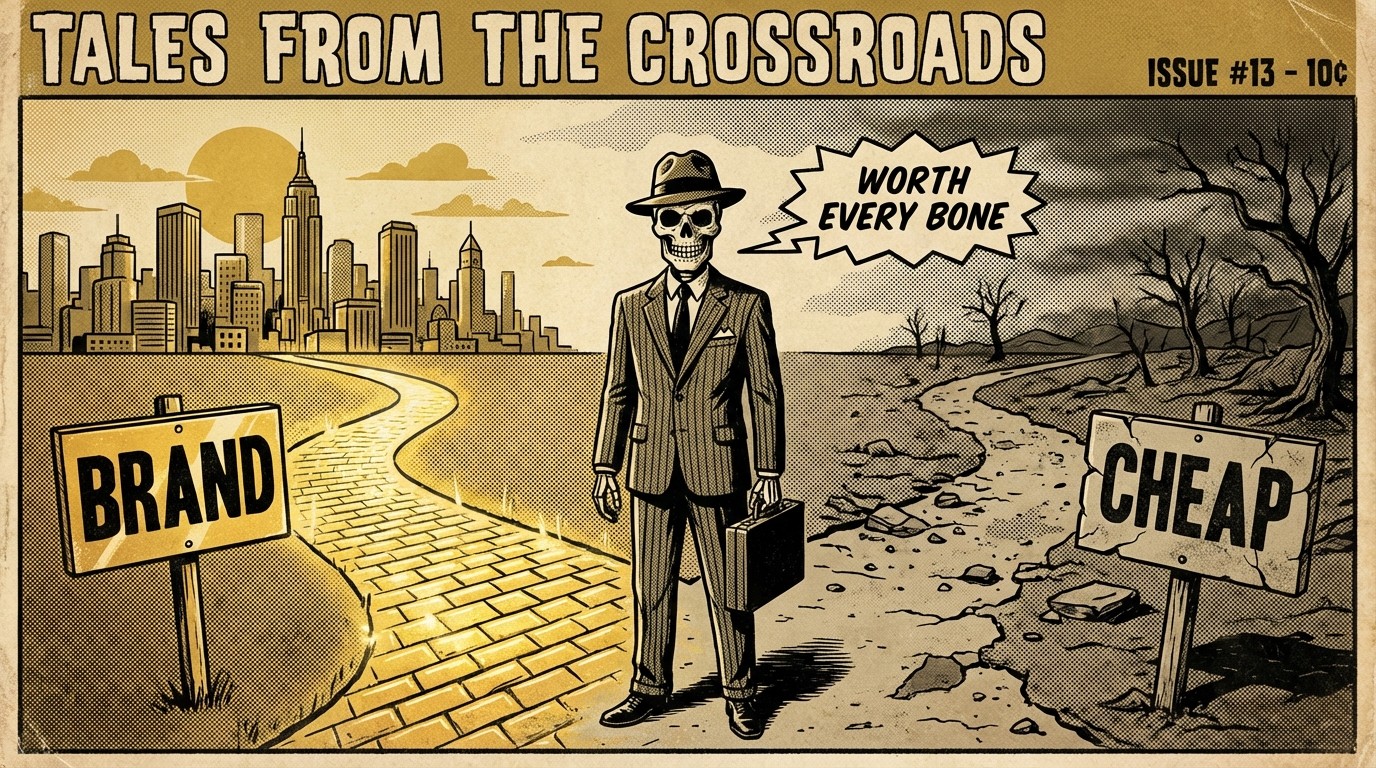
If you Googled this question, you are probably sitting across from a branding agency proposal wondering whether the number at the bottom is an investment or a bonfire.
Fair question. Let us deal with it honestly.
The average B2B branding project from a traditional agency costs $75K-$150K and takes 6-9 months. You get a mood board, a brand guidelines PDF, maybe a new logo, and a lot of meetings where people use the word "essence" without irony. For that price and timeline, skepticism is not cynicism — it is good business sense.
Most branding IS overpriced. Most branding agencies cannot tell you what their work will generate. Most brand books end up in a Google Drive folder that nobody opens after the first week. If that is what "branding" means, then no — it is not worth it.
But here is the turn.
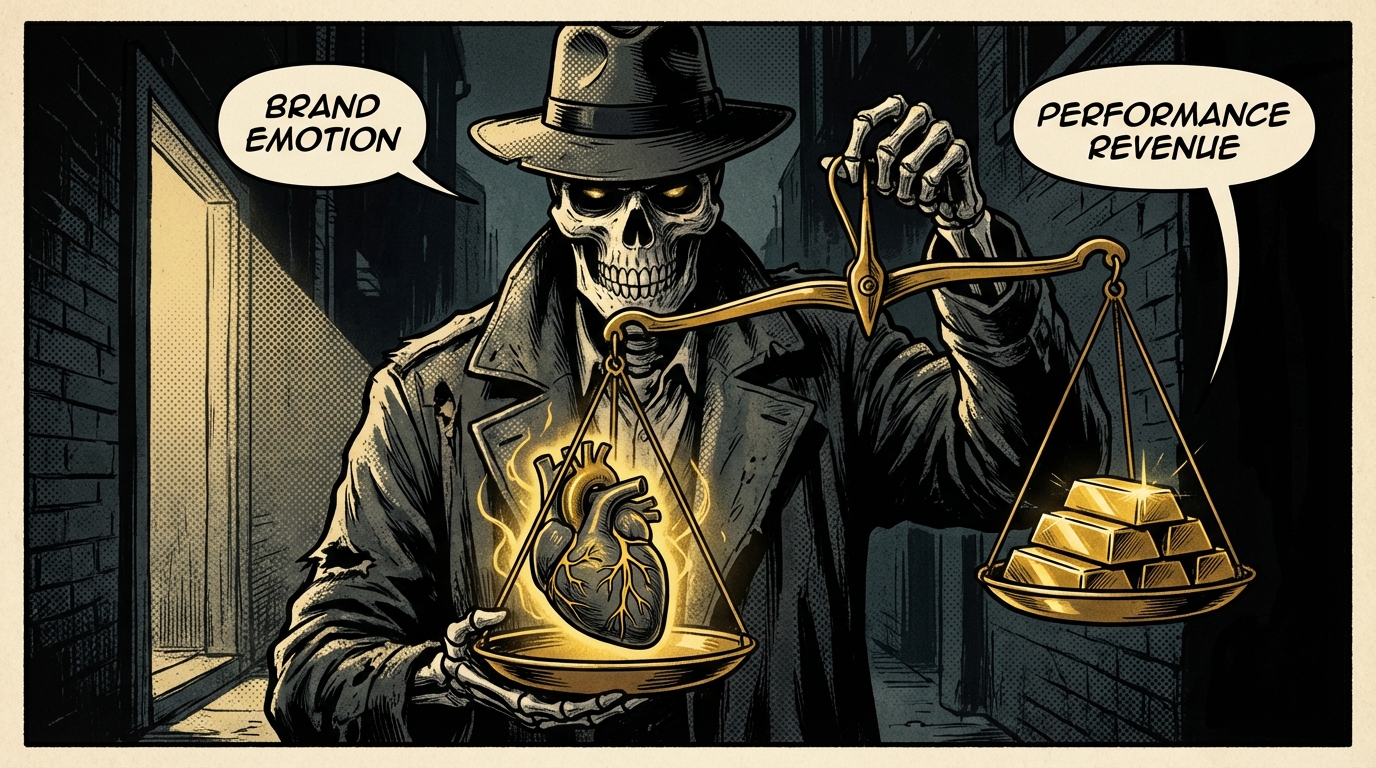
The question is not whether "branding" is worth it. The question is whether revenue-grade brand infrastructure is worth it. Those are different things. One gives you a mood board and a brand book you will never open. The other gives you a system that reduces your cost to acquire customers and compounds over quarters.
One is decoration. The other is infrastructure.
Let us look at what the numbers actually say.
---
The Hard Numbers
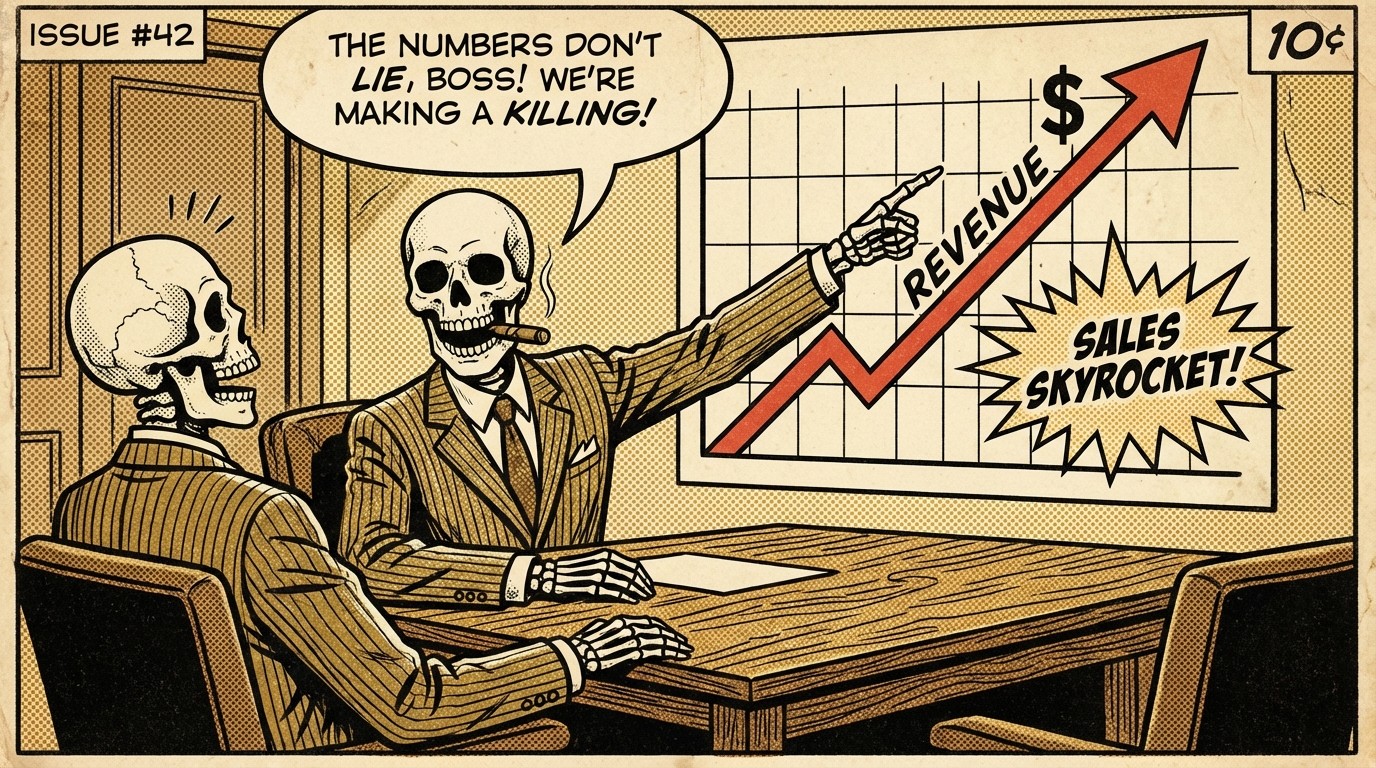
Skip the feelings. Here is what the data shows about brand as a revenue lever.
Intangible Assets Now Dominate Company Value
Intangible assets — brand, intellectual property, reputation — now represent 90% of S&P 500 company value. In 1975, that number was 17%. The Ocean Tomo study has tracked this shift for decades, and the direction is unambiguous: the stuff you cannot touch is worth more than the stuff you can.
This does not mean your logo is worth 90% of your company. It means that the cumulative effect of brand recognition, customer trust, and market positioning is the primary driver of enterprise value. For founders planning a raise or an exit, this is not abstract. It is the number on the term sheet.
Branded Search Delivers 19x ROAS
When someone types your company name into Google, you have already won the intent battle. They know who you are. They are looking for you specifically. That is the highest-intent traffic you can get.
Branded search delivers 19x return on ad spend compared to non-branded paid search. Nineteen times. That is not a rounding error. That is a different category of performance.
The problem? If nobody knows your name, you do not get branded search. You are stuck competing on generic terms where every click costs more and converts less. Brand infrastructure is what creates the name recognition that drives branded search volume. Without it, you are paying full price for every click forever.
For a deeper look at why you need to own your branded search terms, read Pay the Troll Toll.
Strong Brands Reduce CAC by 30-50%
Customer acquisition cost is the metric that kills companies. It does not matter how good your product is if it costs you $500 to acquire a customer worth $400.
Strong brands reduce CAC by 30-50%. Here is why: when your positioning is clear and your identity signals credibility, every touchpoint performs better. Your ads get higher click-through rates because people recognize you. Your emails get higher open rates because your name means something. Your landing pages convert better because visitors already trust you before they arrive. Your sales calls close faster because the prospect has already decided you are credible.
Brand infrastructure does not replace your marketing funnel. It makes every stage of your funnel work harder.
Website Redesign Drives 45% Conversion Lift
A strategic website redesign yields an average 45% lift in B2B SaaS conversion rates. Not a cosmetic refresh — a strategic rebuild that aligns positioning, messaging, information architecture, and performance.
That is not brand magic. That is infrastructure working. When your website clearly communicates who you are, what you do, why it matters, and what the visitor should do next — conversions go up. When it loads fast, works on mobile, and does not make people hunt for the contact form — conversions go up more.
The website is where brand infrastructure meets revenue. It is the single highest-leverage asset most B2B companies own, and most of them treat it like a digital brochure they update once a year.
Customer Acquisition Costs Have Increased 222%
Customer acquisition costs have increased 222% over the past decade. The channels are more crowded. The algorithms are more expensive. The buyers are more skeptical.
Companies without brand infrastructure are paying full retail for every customer. Every ad, every click, every impression starts from zero. There is no recognition, no trust equity, no compounding advantage.
Companies with brand equity get a compound discount. Each quarter of consistent brand presence builds on the last. The cost to acquire the next customer goes down because the brand has done some of the work before the ad even runs.
This is the difference between renting attention and owning it.
Performance Is Brand Infrastructure
Every 1-second improvement in page load time increases conversions by 17%. That sounds like a technical metric, not a branding metric. But brand infrastructure includes performance. The stuff that seems "technical" — site speed, mobile responsiveness, Core Web Vitals — is actually revenue.
When your website loads in 1.5 seconds instead of 4 seconds, that is not just a better user experience. That is more conversions, lower bounce rates, and better ad quality scores. The line between "brand" and "performance" is a false one. Revenue-grade branding treats them as the same thing.
---
Why Most Branding Does Not Deliver
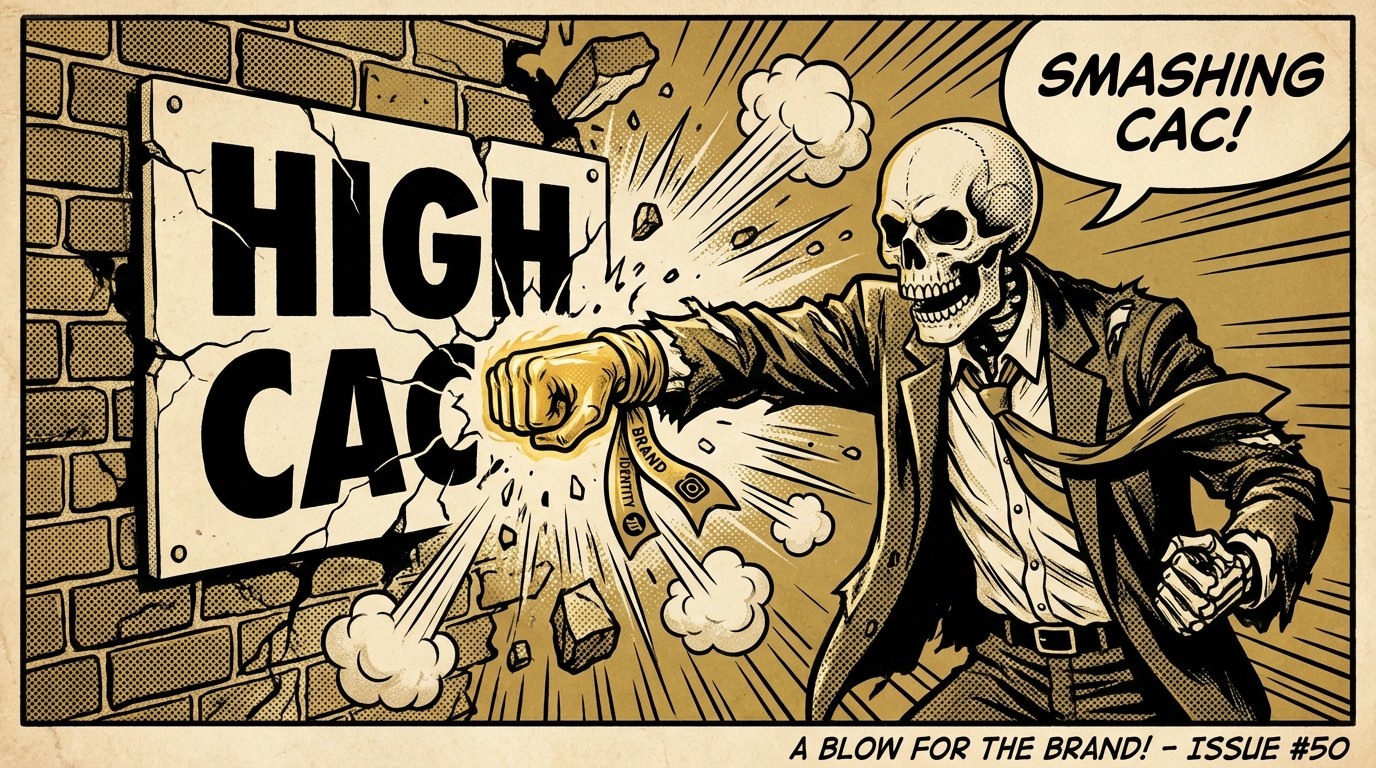
If the numbers are this clear, why do most branding projects fail to produce measurable results? Because most branding projects are not built to produce measurable results. They are built to produce deliverables.
The Museum Curator Problem
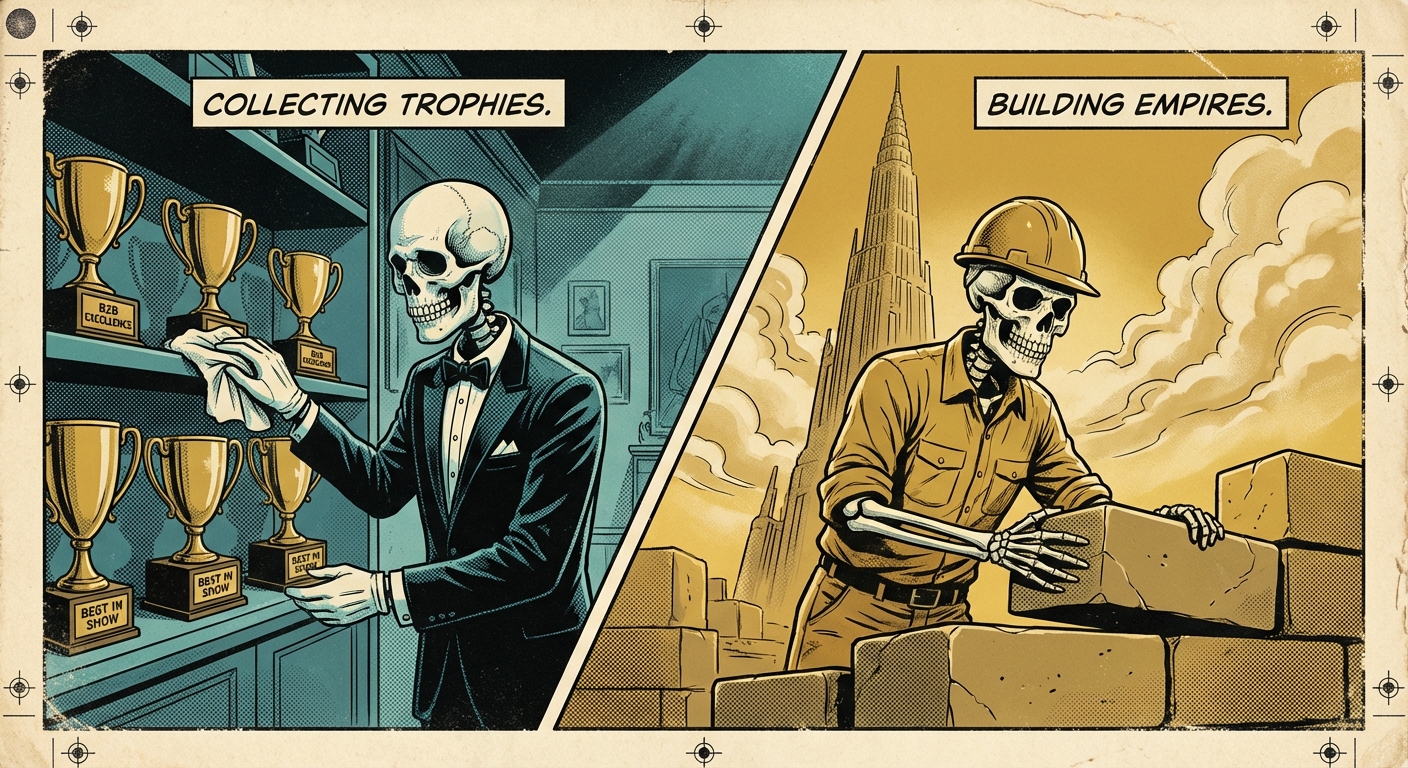
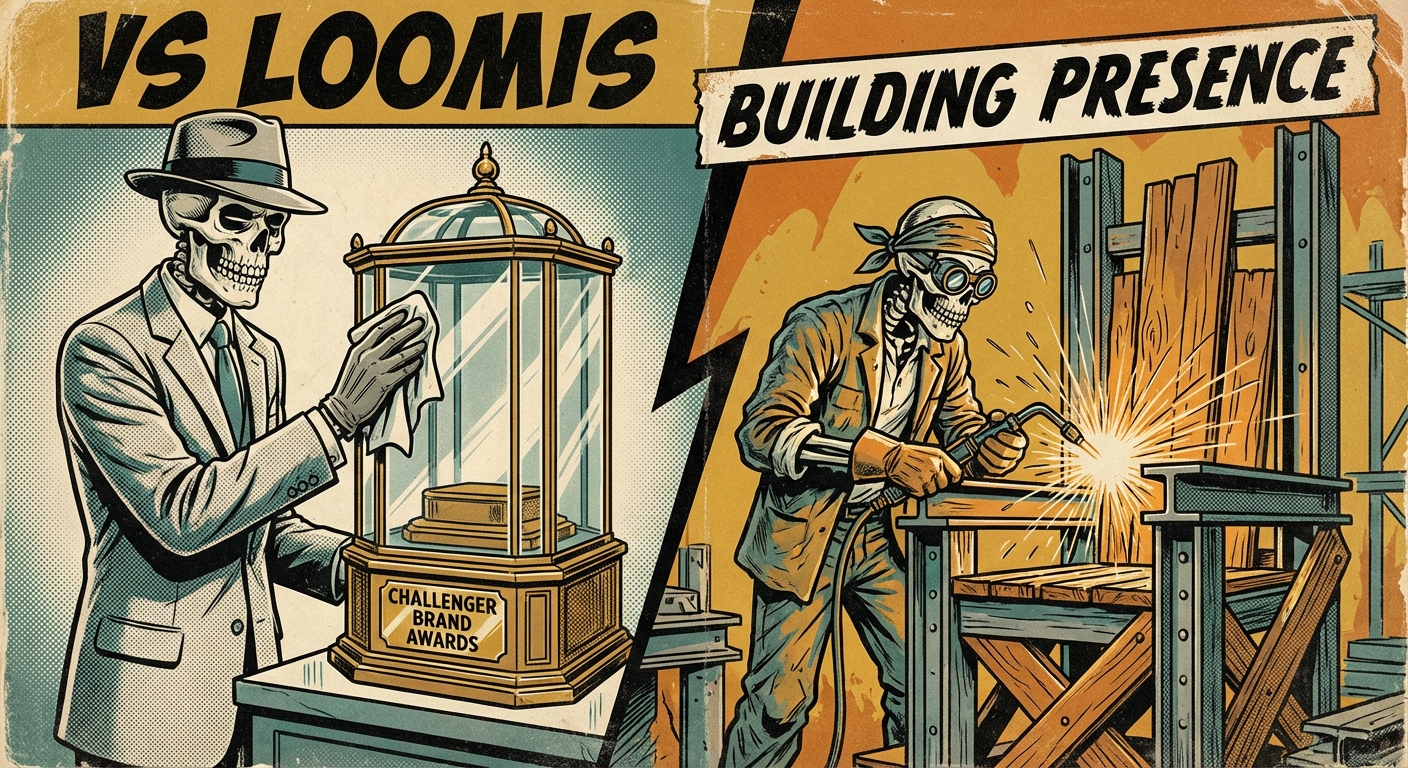
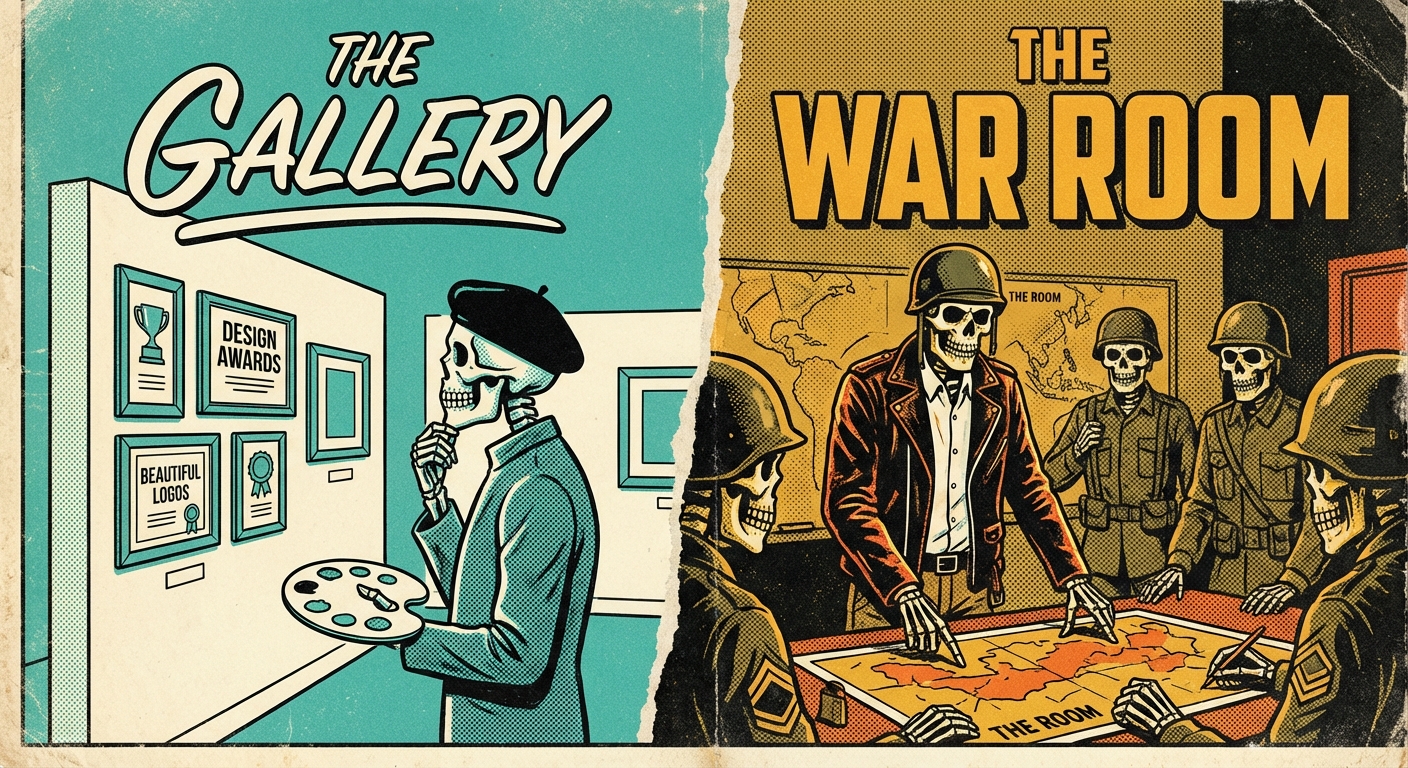
Most agencies optimize for awards, not client results. They build beautiful brand books that sit in a Google Drive folder. They design logos that win design competitions but do not move pipeline. They charge for "discovery" that never discovers anything actionable.
The museum curator problem is real: the agency treats your brand like an art installation. It needs to be beautiful, conceptually coherent, and presentable to a jury of their peers. Whether it actually helps you sell anything is secondary.
You can spot this pattern in the pitch. If the agency spends more time talking about their creative process than your business outcomes, they are building for the portfolio, not for your P&L.
The Timeline Trap
6-9 month engagements mean your market has shifted by the time you launch. Your competitors have shipped two product updates. Your funding timeline has moved. The messaging you agreed on in month two is stale by month seven.
For founders with a funding round in 4 months, traditional branding timelines are useless. You need brand infrastructure that ships in 30-90 days, not a year-long exploration of your brand's "soul."
Speed is not the enemy of quality. Bloated timelines are the enemy of relevance.
The Handoff Problem
You meet the senior strategist on the pitch call. They are sharp. They get your business. They ask the right questions. You sign.
Three weeks later, you realize the sharp strategist has moved on to the next pitch. Your project is now run by an account coordinator, a mid-level designer, and a junior copywriter. The vision that excited you gets diluted through three layers of account management.
This is the bait and switch. It is so common in the agency industry that most clients expect it. But it does not have to be that way. Senior-led teams that do the work — not just sell it — deliver faster and better. For more on this, read Senior-Led vs Committee Branding.
The Measurement Gap
If your branding agency cannot tell you how to measure the impact of their work, they do not understand what they built.
"Brand awareness" is not a metric. "Sentiment" is not a KPI unless you can track it. "We increased your brand equity" means nothing if you cannot point to a number that moved.
Revenue-grade branding has a scoreboard. Branded search volume. Customer acquisition cost trends. Conversion rates by touchpoint. Pipeline velocity. If the agency cannot point to these metrics before you sign, they are selling decoration.
---
What Revenue-Grade Branding Actually Looks Like
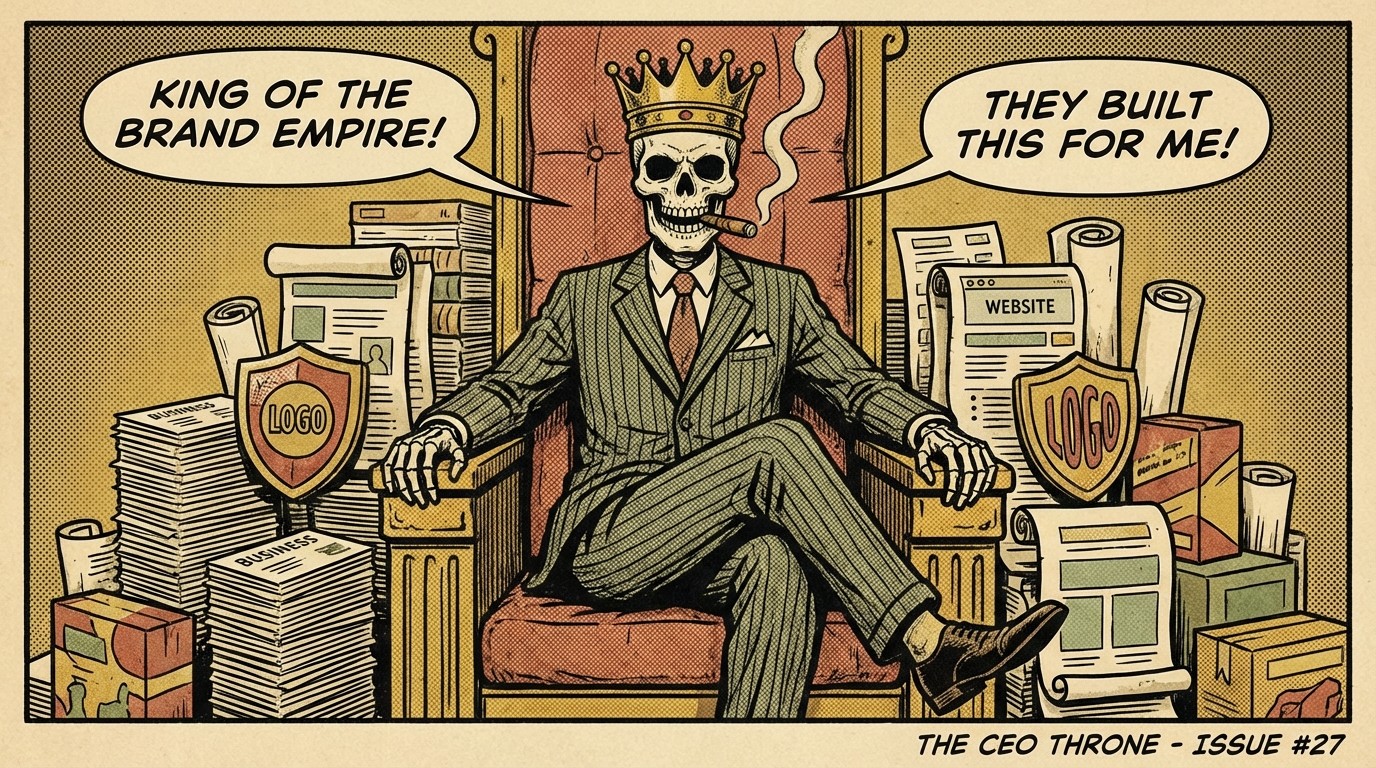
So if most branding is overpriced wallpaper, what does the alternative look like? Here is the framework.
It Is Infrastructure, Not Decoration
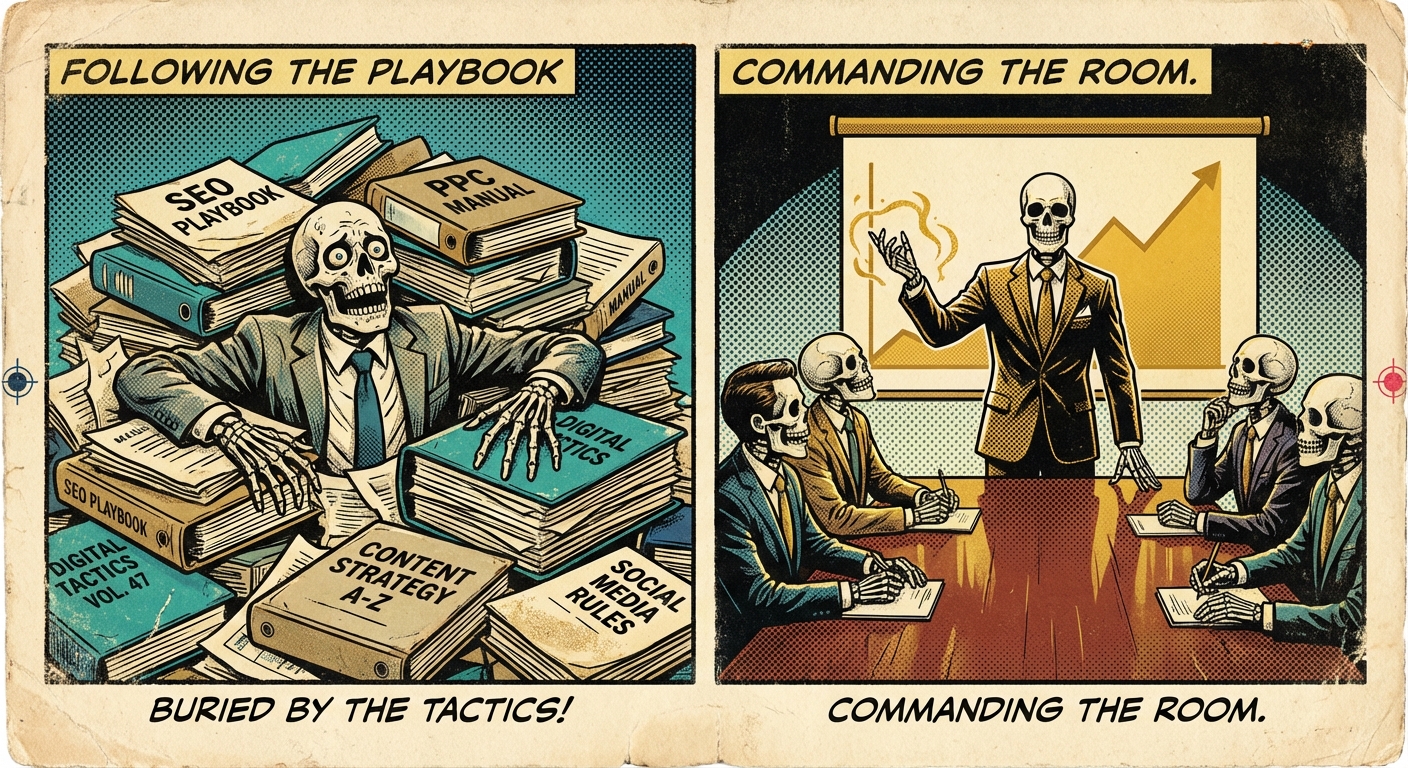
Revenue-grade branding is a system, not a deliverable. Positioning, identity, website, and growth systems that connect to each other and produce measurable outcomes.
Your positioning defines your messaging. Your messaging drives your website copy. Your website copy converts visitors into leads. Your leads flow into a CRM that tracks attribution. Every piece connects to the next. Nothing exists in isolation.
This is what we call Presence Architecture — modular brand infrastructure that compounds instead of decaying.
It Ships Fast
30-90 day sprints, not open-ended exploration. You have a live brand and a converting website before your deadline hits.
Speed forces clarity. When you have 30 days to ship positioning, you cannot afford three rounds of committee review. You make decisions, test them, and iterate. The result is sharper because the timeline demands it.
It Has a Scoreboard
Brand velocity metrics, pipeline attribution, conversion tracking. You can see what is working and what is not.
This is not optional. If you are spending money on brand infrastructure, you should be able to measure the return. Not in vague "awareness" metrics, but in numbers that connect to revenue.
For a practical guide to measuring brand impact with free tools, read Poor Man's Truth Serum.
It Compounds
Unlike paid advertising that stops the moment you stop spending, brand infrastructure continues working. Every piece of content, every mention, every returning customer builds on the foundation.
Paid ads are a faucet. Turn them on, leads flow. Turn them off, leads stop. Brand infrastructure is a flywheel. It takes effort to start, but once it is moving, each rotation takes less energy and produces more output.
After six months of consistent brand presence, your cost per lead should be lower than month one. After a year, it should be significantly lower. If it is not, your brand infrastructure is broken.
The Real Question
The real question is not whether branding is worth it. It is whether you are building brand infrastructure that pays for itself — or buying brand decoration that sits in a folder.
If your branding agency cannot tell you how their work will reduce your CAC, increase your conversion rates, or drive branded search volume — you are buying decoration.
If they can, and they can show you the scoreboard to prove it, then yes. Branding is worth it. It is one of the highest-leverage investments a growing company can make.
---
What to Do Next
If you are evaluating whether branding is worth the investment for your company, here are two starting points:
Take the Revenue-Grade Brand Audit — A full assessment of your brand presence, marketing systems, and AI readiness. You will get a clear picture of where you stand and what to fix first. Delivered in 10 business days.
Book a Brand Therapy Call — A free 55-minute diagnostic call. No pitch. We will walk through your current brand infrastructure, identify the gaps, and give you an honest assessment of whether you need help — and if so, what kind.
If you want to go deeper on the topics covered here:
---
*Michael Sebastian is the founder of Branded Mayhem, a brand strategy and digital marketing agency in Richardson, Texas. He works with founders and operators 6-18 months from a raise, launch, or market move.*
*Last updated: February 12, 2026*
— The Mayhem Crew
"The real question is not whether branding is worth it. It is whether you are building brand infrastructure that pays for itself — or buying brand decoration that sits in a folder."
Frequently Asked Questions
Is branding worth it for a small business?
Yes, if the branding is built as revenue infrastructure. A $15K-$25K investment in positioning, identity, and web presence can reduce your customer acquisition cost by 30-50%. The key is choosing a model that ships fast and measures results — not a 6-month project that delivers a brand book.
How do you measure branding ROI?
Track branded search volume (people Googling your name), customer acquisition cost trends, conversion rates across touchpoints, and pipeline velocity. Revenue-grade branding moves these numbers. If your agency cannot point to these metrics, they are selling decoration.
How much should I spend on branding?
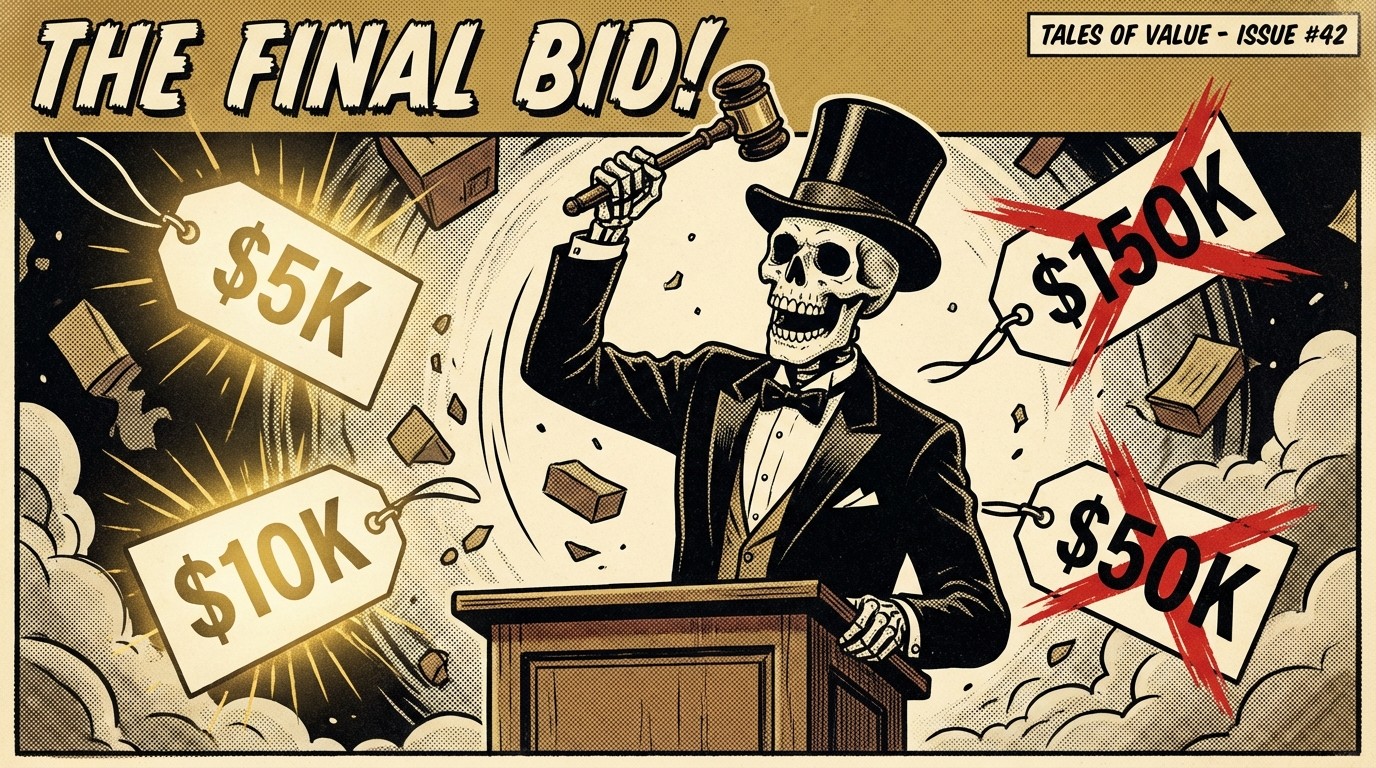
It depends on your stage. Pre-revenue founders should budget $5K-$15K for positioning and basic identity. Established companies ready for growth should budget $15K-$36K for a full Presence Architecture system. The rule: do not spend more than you need, but do not underspend on the foundation.

_1770441011833-DLktHRYW.jpeg "How to Choose a Dallas Marketing Agency (From Someone Who Runs One)")